Medical Marijuana in North Carolina: Is 2026 the Year Everything Changes?
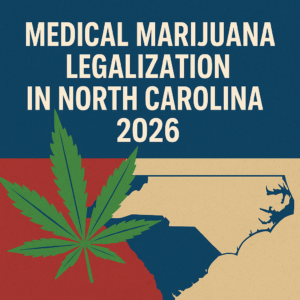
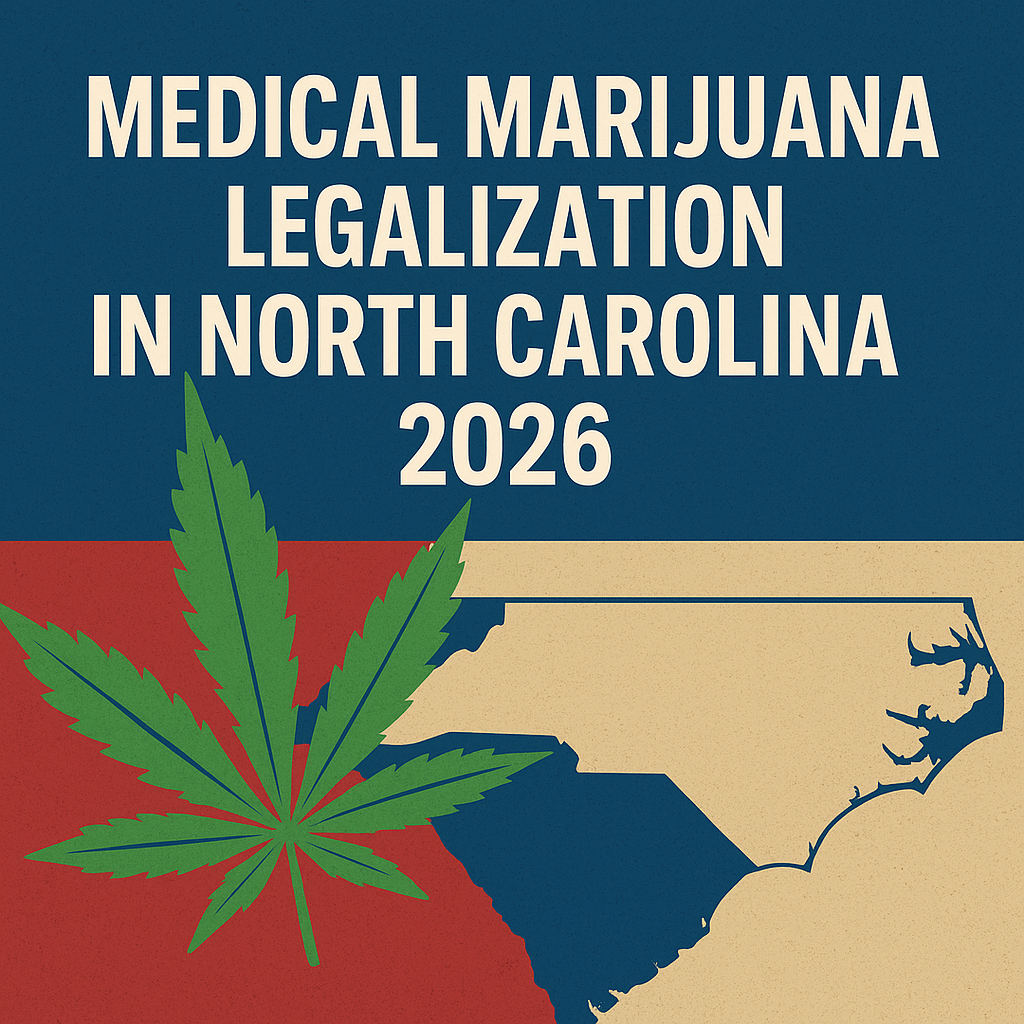
For years, North Carolina has watched neighboring states roll out regulated medical marijuana programs while its own laws stayed among the strictest in the country. As we look toward 2026, the question on many people’s minds is simple: will medical marijuana finally be legalized in North Carolina?
The short answer is: not yet – but the groundwork is being laid. This blog will walk through where things stand today, what’s happening in Raleigh, and what a medical cannabis program in North Carolina could look like if lawmakers move forward in the 2025–2026 session.
Where North Carolina Stands Right Now
As of late 2025, North Carolina is still one of the few states without a statewide medical marijuana program. Cannabis remains illegal for both medical and recreational use under state law.
A few key points about the current situation:
There is no statewide medical cannabis program. Patients cannot register for medical cannabis cards or legally buy marijuana from licensed medical dispensaries.
Possession is still illegal, though small amounts are partially decriminalized. Very small quantities may result in fines instead of jail time, but they are still considered a criminal offense.
One notable exception is that the Eastern Band of Cherokee Indians has moved forward with its own cannabis laws on tribal land, showing that attitudes in some parts of the state are shifting.
For a detailed breakdown of current marijuana penalties and regulations, you can review North Carolina’s cannabis laws here.
At the same time, most of the country has moved toward some form of legalization. A large majority of U.S. states now allow medical marijuana in some capacity, as shown on this national map of state medical cannabis laws.
The Legislative Groundwork for Medical Marijuana
Even though medical marijuana is not yet legal, there has been serious movement in the North Carolina General Assembly over the last few years.
The North Carolina Compassionate Care Act
The main proposal for a medical cannabis program is called the North Carolina Compassionate Care Act. Earlier versions of this bill passed the State Senate with bipartisan support but stalled in the House.
New versions of the bill introduced for the 2025–2026 session aim to:
Create a medical cannabis registry for qualified patients and their caregivers.
Allow licensed physicians to issue certifications for patients with serious medical conditions.
Establish a limited number of highly regulated medical cannabis centers and production facilities.
Require product testing for safety, potency, and purity.
Put strict rules in place around packaging, labeling, and how products can be sold and marketed.
At the time of writing, these bills have not yet been signed into law, but they are active and being debated. That alone is a major change from a few years ago, when medical marijuana bills barely got a hearing.
Broader Legalization Conversations
In addition to medical-focused bills, there have also been proposals that touch on adult-use (recreational) legalization and social equity. These bills go further than medical cannabis alone, but the fact that they’re even being filed shows how far the conversation has shifted.
For 2026, the most realistic scenario is that medical marijuana is addressed first, with adult-use legalization possibly coming later, if at all.
The Governor’s Role and the Cannabis Advisory Council
Another important piece of the puzzle is the Governor’s Office. The current governor has expressed support for cannabis reform and has taken steps to move the conversation forward, including creating an Advisory Council on Cannabis.
This council’s job is to:
Study how other states have implemented both medical and adult-use cannabis.
Review public health, safety, and economic data.
Make recommendations on how North Carolina could regulate cannabis responsibly.
This is a big signal. It means the state is no longer just asking “Should we legalize?” but instead is actively asking “How do we do this in a safe, controlled way?”
What a 2026 Medical Marijuana Program Could Look Like
Because no law has officially passed yet, we don’t know the exact details of a future medical program. However, the drafts of the Compassionate Care Act give us a strong preview of what lawmakers have in mind.
If a medical marijuana law were to pass and take effect around 2026, it would likely include:
1. Strict Qualifying Conditions
North Carolina’s approach would probably be conservative and tightly controlled. Qualifying conditions might include:
Cancer
Epilepsy and seizure disorders
Multiple sclerosis and similar neurological conditions
HIV/AIDS
Parkinson’s disease
PTSD and certain severe mental health conditions, with clear documentation
Chronic or terminal illnesses where other treatments have failed
This kind of list focuses on serious, debilitating conditions, not general wellness or mild ailments.
2. Doctor Supervision and Registration
Medical marijuana would not be something you simply “sign up for” online. Instead:
Patients would need a certification from a licensed physician.
Doctors would be required to review the patient’s medical history, treatment options, and potential risks.
Patients and caregivers would be entered into a statewide registry and issued an ID card.
This keeps medical cannabis clearly within the medical system, rather than a free-for-all.
3. Licensed Dispensaries and Production Facilities
Instead of allowing cannabis to be sold anywhere, North Carolina would likely license a limited number of:
Cultivation and production facilities that grow and process cannabis.
Medical cannabis centers (dispensaries) that are allowed to sell products to qualified patients.
Independent labs that test products for consistency and contaminants.
Rules would likely cover:
Security and surveillance
Distance from schools and certain public spaces
Hours of operation
Strict packaging and labeling requirements
The goal would be to make access safe and controlled, similar to a pharmacy model.
4. Clear Boundaries and Patient Protections
Any medical marijuana program in North Carolina would almost certainly emphasize both patient protections and clear limits:
ID cards for patients and caregivers
Rules around where cannabis can be used (for example, no public use)
Ongoing monitoring to watch for diversion to non-patients
Strong penalties for driving under the influence or selling outside the medical system
This balanced approach aims to help people who truly need medical cannabis without opening the door to misuse.
What Legalization Would Mean for North Carolinians
If medical marijuana becomes legal in 2026, the impact would stretch across patients, families, and healthcare providers.
Patients with serious conditions could gain a new treatment option when traditional medications haven’t worked or caused harsh side effects.
Families would no longer need to gamble with unregulated products or travel out of state to access medical cannabis.
Doctors and clinics would have to learn new regulations, documentation standards, and best practices for counseling patients on cannabis.
Communities could see new jobs, businesses, and tax revenue, while also needing to address concerns about youth access and public safety.
For many people living with chronic pain, seizures, or severe mental health conditions, legalization isn’t just a political debate—it’s a potential quality-of-life transformation.
How to Get Ready for Possible Changes in 2026
Until a law is officially passed and signed, nothing is guaranteed. But if you live in North Carolina and want to be prepared, here are a few practical steps:
Stay informed.
Follow updates from state government, health organizations, and local news outlets so you know if and when a law is passed.Talk with your healthcare provider.
If you have a serious medical condition, start a conversation about whether medical cannabis might be an option for you if it becomes legal.Learn the pros and cons.
Cannabis can help some patients, but it’s not risk-free. Read up on possible side effects, interactions with other medications, and responsible use.Make your voice heard.
If you care about this issue, contact your state representatives, share your story, and participate in public hearings or town halls when possible.
Looking Ahead
As 2026 approaches, North Carolina is clearly at a turning point. The state still has no legal medical marijuana program today, but active legislation, a governor engaged in cannabis policy, and an advisory council focused on regulation all suggest that change is getting closer.
Whether medical marijuana is fully legalized in 2026 or a little later, one thing is clear: the conversation has shifted from “if” to “when” and “how.” For patients, families, and healthcare providers, the best thing to do now is to stay educated, stay engaged, and be ready for a future where medical cannabis may finally be a legal, regulated option in North Carolina.